- Français
- |
- Booklist
- |
- Week of Prayer
- |
- Links
- Areopagus - a forum for dialogue
- Academic journals
- Acronyms
- Bible tools
- Bibliographies
- Booksellers and publishers
- Churches
- Canadian church headquarters
- Directory of Saskatchewan churches
- Retreat centres
- Saskatchewan church and non-profit agencies
- Ecumenism.net Denominational links
- Anabaptist & Mennonite
- Anglican
- Baptist
- Evangelical
- Independent episcopal
- Lutheran
- Methodist, Wesleyan, and Holiness
- Miscellaneous
- Mormon
- Orthodox (Eastern & Oriental)
- Para-church ministries
- Pentecostal / charismatic
- Presbyterian & Reformed
- Quaker (Society of Friends)
- Roman & Eastern Catholic
- United and uniting
- Documents of Ecumenical Interest
- Ecumenical agencies
- Ecumenical Booklist
- Ecumenical Dialogues
- Glossary
- Human rights
- Inter-religious links
- Justice & peace
- Lectionaries
- Religious news services
- Resource pages
- Search Ecumenism.Net
- |
- Documents
- Ancient & Medieval texts
- Ecumenical Dialogues
- Interreligious
- Anabaptist & Mennonite
- Anglican
- Evangelical
- Lutheran
- Orthodox
- Reformed & Presbyterian
- Roman & Eastern Catholic
- United & Uniting
- Miscellaneous churches
- Canadian Council of Churches (CCC)
- Conference of European Churches (CEC)
- Interchurch Families International Network (IFIN)
- National Council of Churches in Australia (NCCA)
- Lausanne Committee for World Evangelism (LCWE)
- World Council of Churches (WCC)
- Other ecumenical documents
Church traditions
Documents from ecumenical agencies
- |
- Dialogues
- Adventist-Reformed
- African Instituted Churches-Reformed
- Anglican-Lutheran
- Anglican-Orthodox
- Anglican-Reformed
- Anglican-Roman Catholic
- Anglican-United/Uniting
- Baptist-Reformed
- Disciples of Christ-Reformed
- Disciples of Christ-Roman Catholic
- Evangelical-Roman Catholic
- Lutheran-Mennonite
- Lutheran-Mennonite-Roman Catholic
- Lutheran-Reformed
- Lutheran-Roman Catholic
- Mennonite-Reformed
- Mennonite-Roman Catholic
- Methodist-Reformed
- Methodist-Roman Catholic
- Oriental Orthodox-Reformed
- Orthodox-Reformed
- Orthodox-Roman Catholic
- Pentecostal-Reformed
- Prague Consultations
- REC-WARC Consultations
- Roman Catholic-Lutheran-Reformed
- Roman Catholic-Reformed
- Roman Catholic-United Church of Canada
- |
- Quick links
- Canadian Centre for Ecumenism
- Canadian Council of Churches
- Ecumenical Shared Ministries
- Ecumenism in Canada
- Interchurch Families International Network
- International Anglican-Roman Catholic Commission for Unity and Mission
- Kairos: Canadian Ecumenical Justice Initiatives
- North American Academy of Ecumenists
- Prairie Centre for Ecumenism
- Réseau œcuménique justice et paix
- Week of Prayer for Christian Unity
- Women's Interchurch Council of Canada
- World Council of Churches
- |
- Archives
- |
- About us

Knowledge-Sharing Symposium on the Doctrine of Discovery


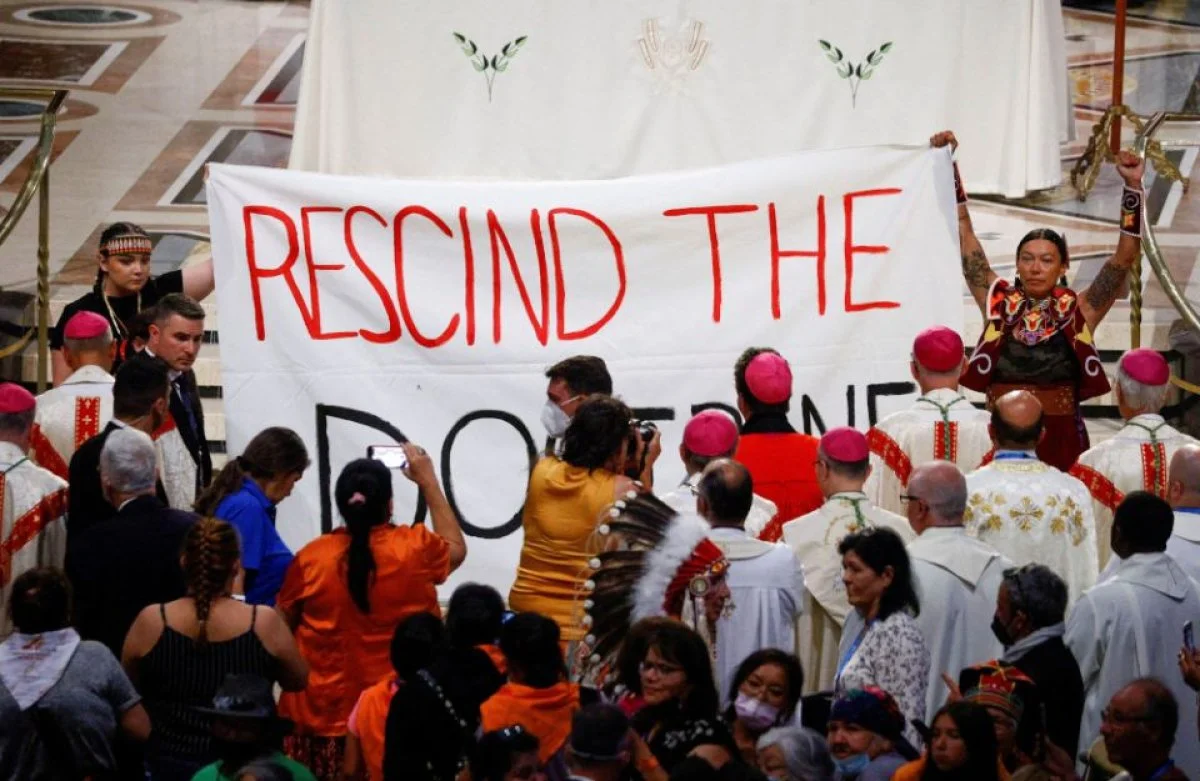
Indigenous people hold a banner calling on Pope Francis to 'rescind the doctrine,' an apparent reference to the so-called Doctrine of Discovery, a collection of old papal teachings that encouraged explorers to colonize and claim the lands of any people who were not Christian, placing both the land and the people under the sovereignty of European Christian rulers. The incident occurred during a papal Mass at the National Shrine of Sainte-Anne-de-Beaupré in Quebec. Photo: CNS/Guglielmo Mangiapane, Reuters.
From 26 to 29 May 2026, a Knowledge-Sharing Symposium on the Doctrine of Discovery was held in Edmonton, examining the historical and legal consequences of colonization for Indigenous Peoples, and the Catholic Church’s involvement in that colonization in the 15th and 16th centuries.
The event was hosted by the Canadian Conference of Catholic Bishops (CCCB), with support from the Pontifical Committee for Historical Sciences, and representation from the Vatican’s Dicastery for Promoting Integral Human Development. It was organized by a group of Catholic men and women, Indigenous and Church leaders and scholars.
The invited participants came from Canada, the United States, Bolivia, Brazil, Mexico, Peru, France, Spain, and New Zealand. They included Indigenous leaders, Elders and Knowledge Keepers, Representatives of Original Nations of this continent, historians specializing in colonization, legal scholars, authors who have published articles and books on the Doctrine of Discovery, Catholic bishops and theologians, and participants coming from diverse spiritual traditions.
The CCCB announced its intention to sponsor such a symposium following the publication of the Holy See’s statement on the Doctrine of Discovery on 30 March 2023. As distinct from a specifically academic symposium, the gathering followed a traditional methodology of knowledge-sharing, underlining the importance of listening and learning from differing perspectives. In addition to keynote addresses, the program included ample time for smaller group discussions among participants.
The first major area of focus of the knowledge-sharing gathering was the colonization which took place in the 15th and 16th centuries and onward, exploring its negative impacts on Indigenous Peoples and the justifications given by colonizing powers for the taking of their lands, certain papal bulls of the 15th and 16th centuries, and the relationship between the Holy See and colonizing powers during this period. The second major area of focus addressed the legal discovery doctrine as it emerged in the 19th century, and the legacy of legal decisions depriving Indigenous Peoples of land and sovereignty, which continue to have an impact today.
The goals of the knowledge-sharing gathering included coming to a deeper understanding of both historical and legal developments, establishing a network of scholars with differing perspectives and terminologies so as to encourage greater sharing of information, strengthening relations between the Church and Indigenous Peoples by engaging in deep listening and sincere dialogue, and opening up paths for common action in support of truth, accountability, healing, and service of the common good.
Participants entered deeply into the process of listening, learning and sharing insights and perspectives, which led to excellent conversations, a deepening respect, and an expansion of our language and understanding. The gathering ended with a unanimous desire to carry forward the conversation.
 Posted: June 3, 2026 •
  Permanent link: ecumenism.net/?p=14977
Categories: News • In this article: Catholic, Doctrine of Discovery, Indigenous peoples, Reconciliation
Transmis : 3 juin 2026 • Lien permanente : ecumenism.net/?p=14977
Catégorie : News • Dans cet article : Catholic, Doctrine of Discovery, Indigenous peoples, Reconciliation
An Orthodox reflection on ‘Magnifica Humanitas’
— June 1, 20261 juin 2026
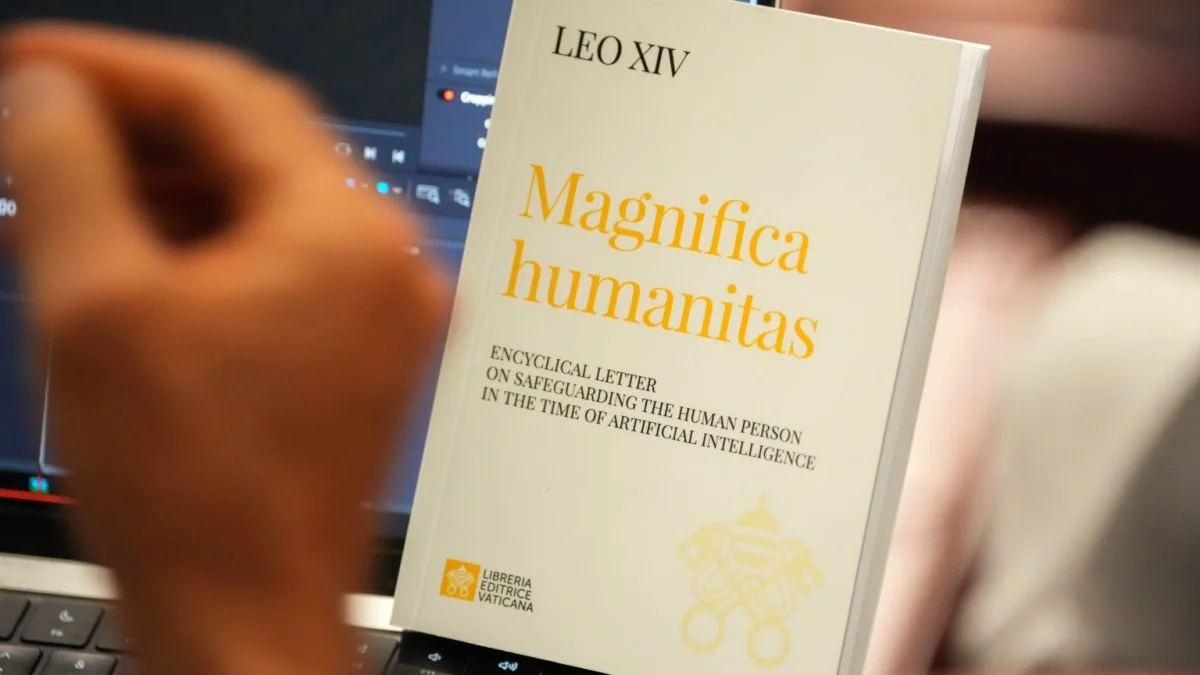
With its 243 paragraphs and more than 200 references, “Magnifica humanitas: On Safeguarding the Human Person in the Time of Artificial Intelligence,” the first encyclical of His Holiness Pope Leo XIV, will undoubtedly stand as a milestone in the development of Roman Catholic social doctrine. In retrospect, one better understands Cardinal Robert Prevost’s choice of the name “Leo” a little over a year ago: it signals a clear intention to situate his pontificate within a tradition of continuity, particularly in the Church’s mission to serve the most vulnerable in society, as did Pope Leo XIII.
… Read more » … lire la suite »
Eastern Orthodox and Oriental Orthodox Churches move towards unity after 1,600 years of separation
— May 26, 202626 mai 2026
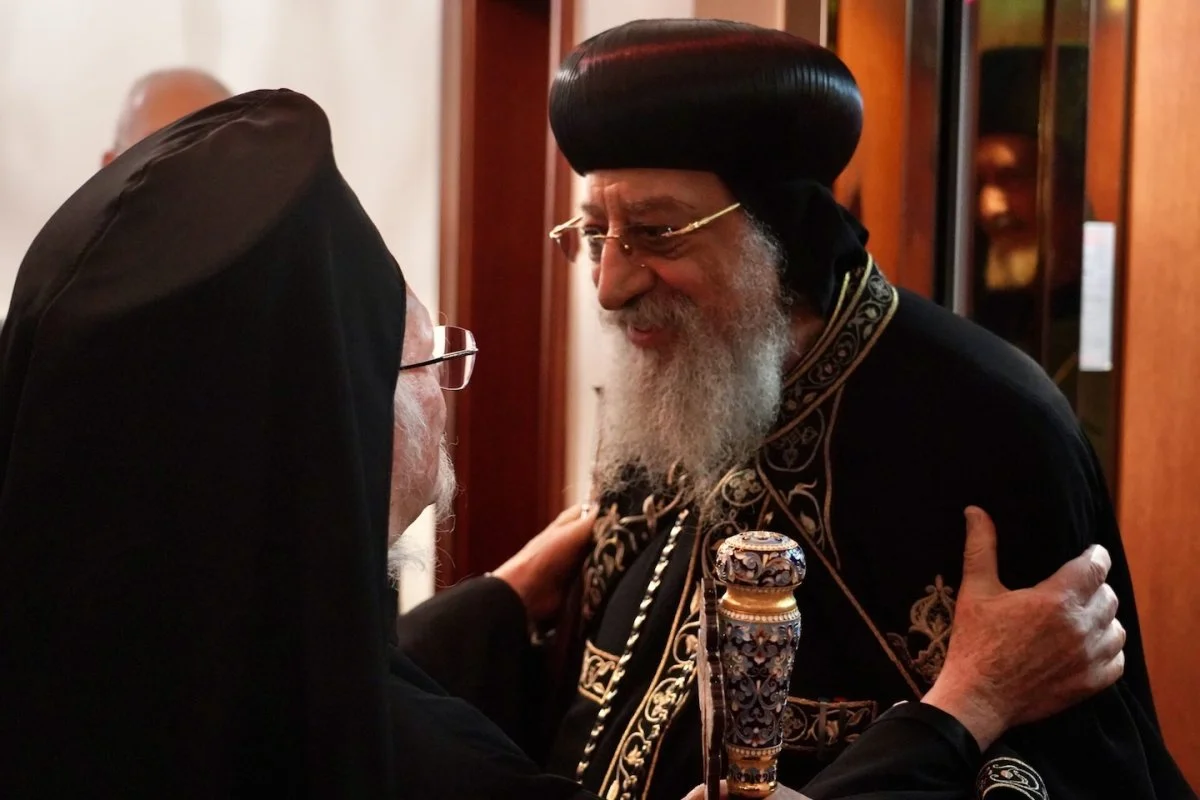
Eastern Orthodox and Oriental Orthodox leaders took a major step towards healing a 1,600‑year division when Ecumenical Patriarch Bartholomew welcomed Pope Tawadros II of the Coptic Orthodox Church to the Phanar for a celebration of the Divine Liturgy on the Sunday of the Myrrh-Bearing Women at the Patriarchal Church of Saint George. Both hierarchs called for renewed commitment to unity between their traditions.
In his official address at the conclusion of the Divine Liturgy, His All-Holiness spoke about the relationship between the Eastern Orthodox and Oriental Orthodox Churches, saying that “the relationship between the Eastern Orthodox and the Oriental Orthodox Churches occupies a unique and privileged place within the broader ecumenical endeavour.” He detailed a path to the restoration of unity between the two Churches, and emphasized that “we have been called to move from agreement to reception, from dialogue to life, from theological convergence to sacramental and pastoral cooperation.”
… Read more » … lire la suite »
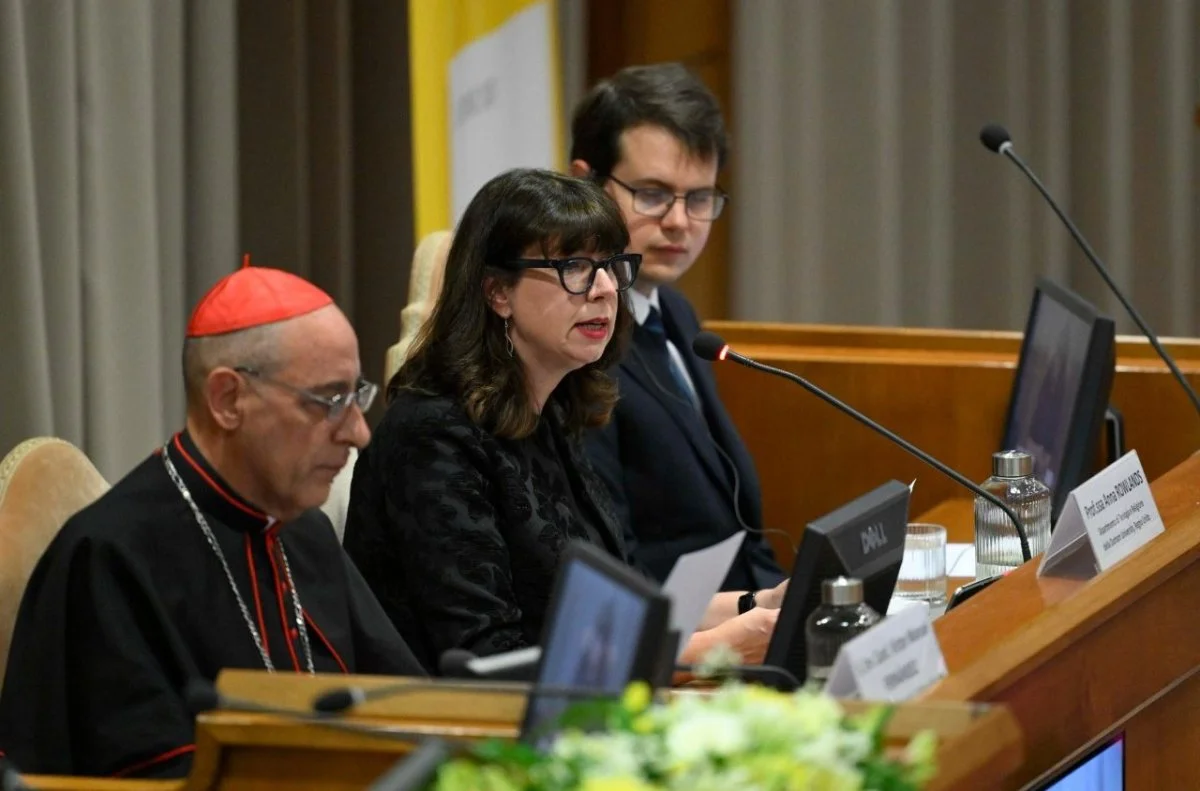
Anna Rowlands: Pope Leo’s ‘Magnifica humanitas’ will have enduring impact
— May 25, 202625 mai 2026
As Pope Leo XIV’s encyclical ‘Magnifica humanitas’ is unveiled, Professor Anna Rowlands, theologian at Durham University, tells Vatican News that such a powerful message—addressing both the benefits and dangers of our AI era—will leave an enduring mark on the Church and the world.
“There is not a tomorrow to begin thinking about these issues.”
Professor Anna Rowlands, theologian at Durham University in the United Kingdom, stressed this point in an interview with Vatican News following the release of Pope Leo XIV’s first encyclical, Magnifica humanitas: On Safeguarding the Human Person in the Time of Artificial Intelligence, presented at the Vatican on May 25.
… Read more » … lire la suite »
‘Magnifica Humanitas’: Pope Leo’s first encyclical says AI must serve humanity, not ‘culture of power’
— May 25, 202625 mai 2026
Pope Leo XIV published his landmark encyclical on artificial intelligence, “Magnifica Humanitas”, on May 25, comparing the attempt to build an AI future that excludes God to the “Tower of Babel” and underlining the need to safeguard human dignity as it is “threatened by new forms of dehumanization.”
“The risk of dehumanization — of building a future that excludes God and reduces the other to a means — is an ancient and ever-new temptation that today takes on a technical guise,” Pope Leo wrote in his first encyclical, “Magnifica Humanitas: On Safeguarding the Human Person in the Time of Artificial Intelligence.”
… Read more » … lire la suite »
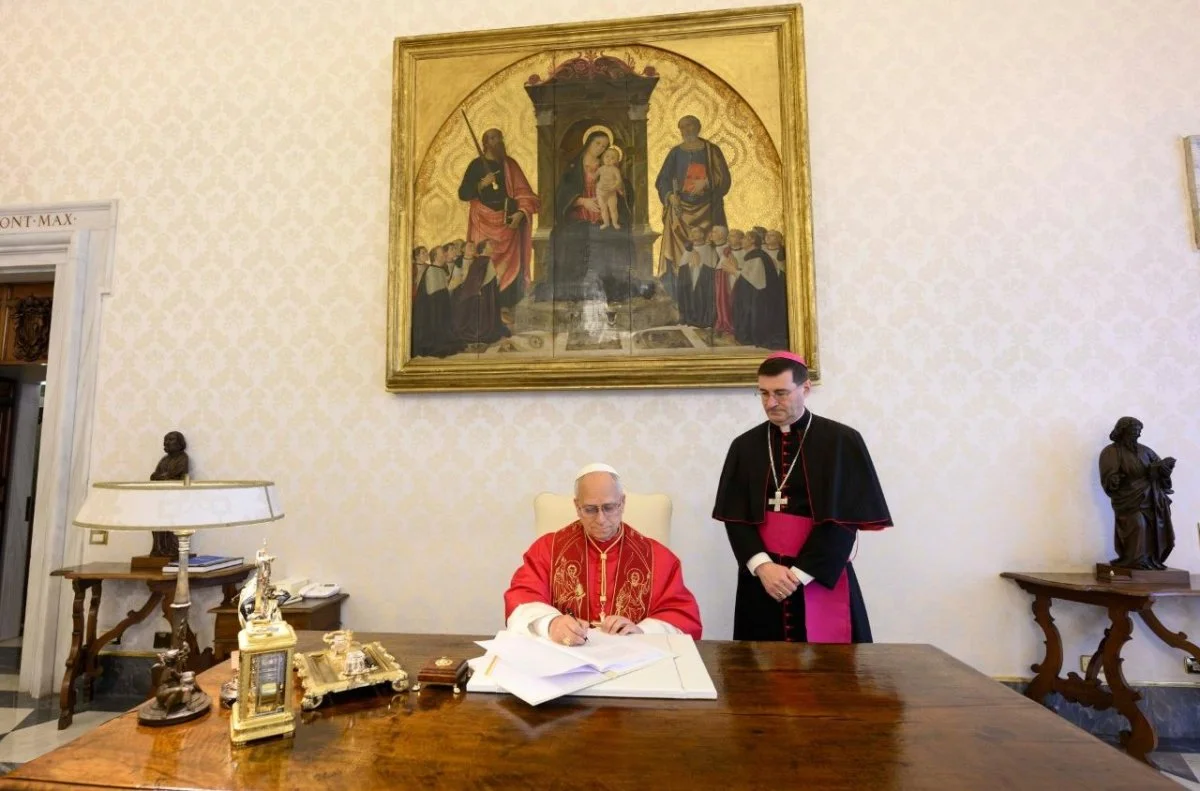
Pope Leo’s ‘Magnifica humanitas’: AI must serve humanity not concentrate power
— May 25, 202625 mai 2026
“Humanity, created by God in all its grandeur, is today facing a pivotal choice: either to construct a new Tower of Babel or to build the city in which God and humanity dwell together.”
The opening words of Pope Leo XIV’s first encyclical, Magnifica humanitas: On Safeguarding the Human Person in the Time of Artificial Intelligence, summarize its underlying reasons and purpose.
Published on Monday, May 25, the Pope signed the encyclical on May 15, the 135th anniversary of the promulgation of Pope Leo XIII’s Rerum novarum.
… Read more » … lire la suite »
The Consultation on Common Texts supports an ecumenical Festival of Creation
— May 15, 202615 mai 2026
The Consultation on Common Texts supports an ecumenical Festival of Creation and makes editorial changes in the alternative texts for Holy Week, Easter Season, and early Pentecost.
The Consultation on Common Texts (CCT) held its annual meeting in Decatur, Georgia on April 20 to 21, 2026. The Cooperative Baptist Fellowship hosted the meeting at its headquarters, with the fellowship’s Executive Coordinator Paul Baxley extending a welcome in person to attending CCT members.
… Read more » … lire la suite »
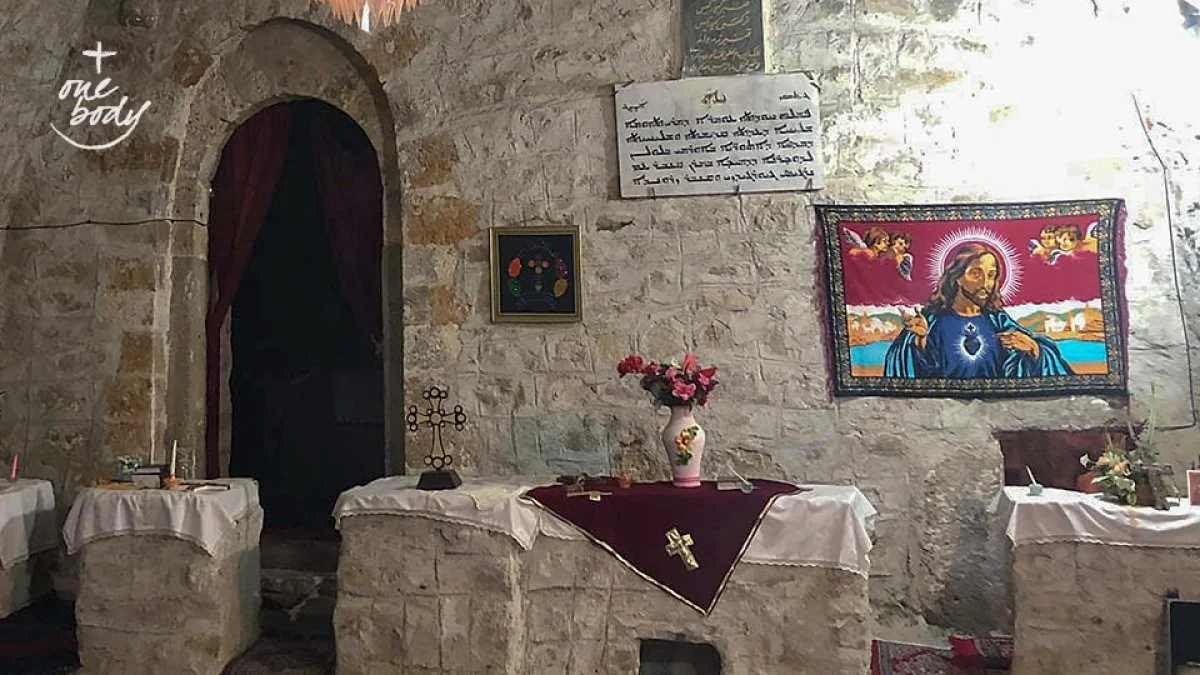
An Ecumenical Breakthrough | One Body
— May 4, 20264 mai 2026
On July 20, 2001, the Pontifical Council for Promoting Christian Unity (PCPCU) published its Guidelines for Admission to the Eucharist between the Chaldean Church and the Assyrian Church of the East. These Guidelines open the way for competent authorities in the Chaldean Catholic Church and the Assyrian Church of the East to establish procedures and provide appropriate means for the Chaldean and Assyrian faithful to receive the Eucharist of either Church under specific circumstances in cases of pastoral necessity. The principal issue for the Catholic Church in approving the decree related to the question of the validity of the Eucharist when celebrated with the Anaphora (or Eucharistic Prayer) of Addai and Mari which lacks a literal recitation of the Institution Narrative, Jesus’ words: “This is my Body, This is my Blood.” After careful study, the validity of this Anaphora was recognized by the Congregation of the Doctrine of the Faith (CDF) on January 17th 2001. Subsequently approved by Pope John Paul II, this has been recognized as an audacious decision: Robert Taft, SJ, an Archimandrite in the Ukrainian Catholic Church and a consultant for the Vatican Congregation for the Oriental Churches, has called the publication of the Guidelines “the most remarkable Catholic magisterial document since Vatican II.”
… Read more » … lire la suite »
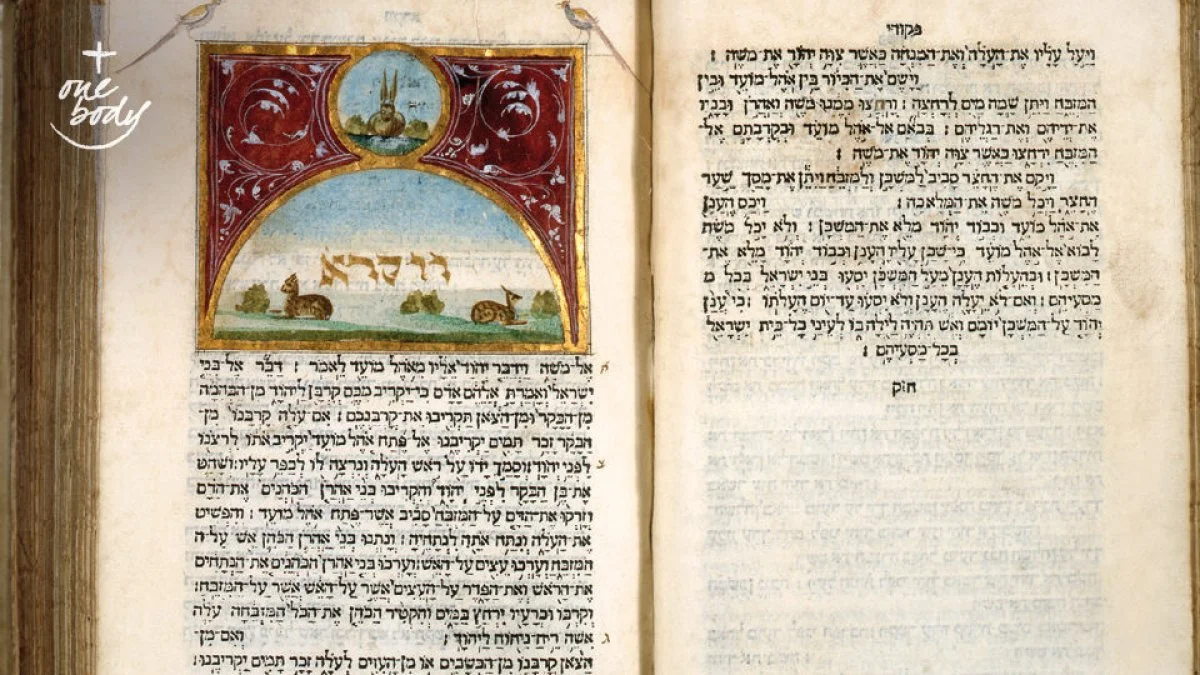
Reading Our Shared Bible With New Eyes: The 25th Anniversary of the Vatican’s Document on the Jewish and Christian Scriptures | One Body
— Mar. 31, 202631 mars 2026
There has never been a time when Jews and Christians were not talking with each other about the Bible. Well, perhaps “talking” is a bit misleading – for most of that time, Jews and Christians engaged in strenuous arguments with each other about the Bible and its meaning. Despite early attempts to sever Christianity from the Jewish Scriptures, such as by Marcion in the second century. Moreover, it has insisted that its way of reading those Scriptures, especially texts seeming to prophesy a messiah, was the only correct way.
… Read more » … lire la suite »
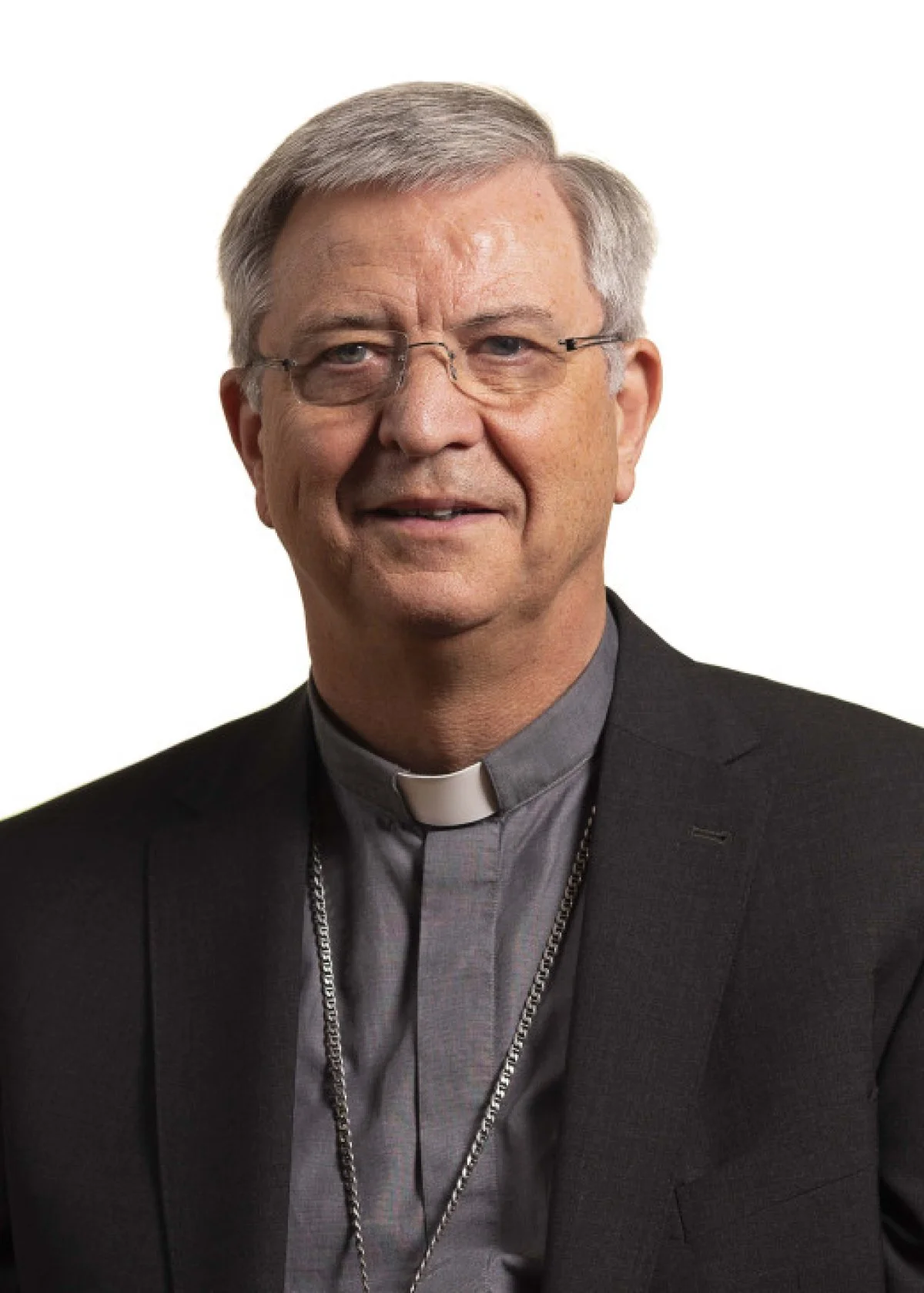
Belgian bishop plans to ordain married men to fulfil Synod vision
— Mar. 21, 202621 mars 2026
Bishop Johan Bonny of Antwerp has challenged Rome to push forward with synodal reforms by announcing changes including the ordination of married men in his diocese by 2028.
Carefully quoting guidelines for the Synod on Synodality’s implementation phase (2025-2028), his 11-page pastoral letter proposed the viri probati reform alongside the naming of woman pastors, a new understanding of parishes, welcoming new Catholics and updating the Church’s message.
… Read more » … lire la suite »
North America-Turtle Island Regional Ecumenical Theological Institute (NATI-RETI) 2026: “Where Now for Visible Justice?”
— Mar. 6, 20266 mars 2026
The Canadian Council of Churches (CCC) and the National Council of Churches of Christ in the USA (NCC), initiated and supported by the World Council of Churches (WCC), are proud to announce a joint theological project: the North America-Turtle Island Regional Ecumenical Theological Institute (NATI-RETI) 2026. Scheduled for August 3 through August 16, 2026, this initiative represents a significant renewed chapter in cross-border collaboration, providing a shared platform for emerging Christian leaders from Canada and the United States to engage in deep theological reflection and spiritual fellowship.
… Read more » … lire la suite »